Why Sell a Perfect Company? Igor Fait and Marek Malík Take You Inside the World of Private Equity


Private equity is often perceived as a black box. In this interview, billionaire investor Igor Fait and Jet Investment Managing Partner Marek Malík explain how they decide when to sell a company, how billion-euro buyers are found, and why building value sometimes means knowing when to let go.
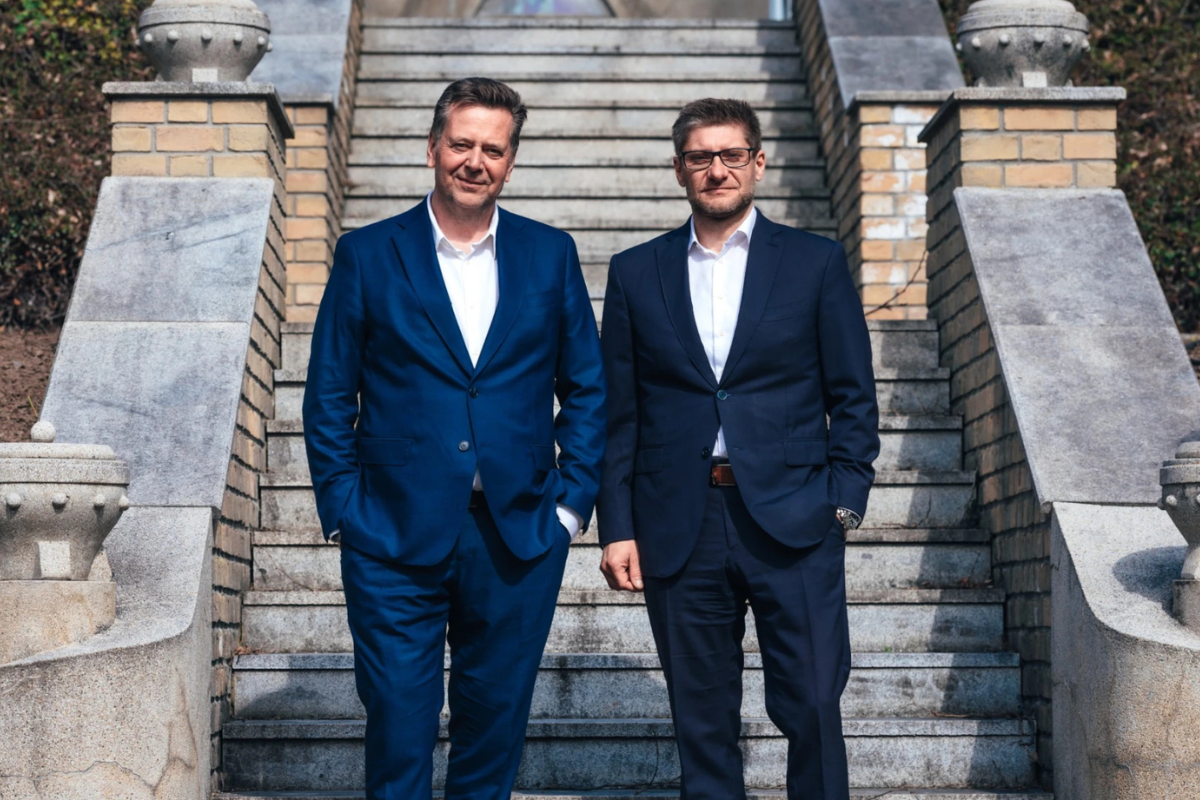
Over the past two years, Brno-based investor Igor Fait has completed the two defining transactions of his career. First, Jet Investment sold the engineering and energy group Tedom to a Japanese buyer in a multi-billion-crown deal. This year, the firm completed another landmark exit by selling Poland's Rockfin for a comparable amount.
Fait sat down for a conversation with the Managing Partner of Jet Investment, a Brno-based private equity vehicle that ranks among the most successful on the Czech market. In the process, he offers a behind-the-scenes look at the inner workings of the multi-billion fund—in which numerous Czech billionaires invest—and provides insight into the thinking behind strategy, changes in direction, and the distribution of roles within the firm.
"One lesson I've learned from our acquisitions is that I prefer companies that are not run solely by their founders," says Fait, the majority owner of Jet Investment. "A business should already have a professional management structure in place. Every owner needs a capable successor."
"Marek is a highly experienced manager. We've worked together for a long time. How long has it been now, Marek?"
"Fifteen, maybe sixteen years," Malík replies. Alongside Fait, he leads Jet Investment's fund management business and played a pivotal role in both the acquisition and eventual sale of Rockfin, the most profitable investment in the firm's history.
"I know exactly what to expect from him," Fait says. "He has international experience, having spent several years with Deutsche Bank in London. That's where he developed a strong macroeconomic perspective and deep expertise in financial markets."
Throughout the conversation, the two complement one another naturally. Even when they disagree on details, the exchanges remain light-hearted and good-humoured.
You often say you prefer acquiring companies that are not founder-led. Are you now trying to make Jet Investment itself more attractive to potential investors?
Igor Fait: Absolutely. Bringing in a new shareholder could be beneficial for Jet. More conservative limited partners—both institutional and private investors—generally prefer an asset manager with a broader ownership structure. In the same way that we like to see professional management already established when we acquire a business, having a broader shareholder base could make Jet more attractive to future investors as well.
When could that happen?
IF: I honestly don't know. We'll see. (laughs)
But you're actively preparing for that possibility?
Marek Malík: The firm is built on several types of funds, so a management structure is necessary in any case—both in terms of project management and fundraising.
IF: We've grown to 42 people today, and our management structure has become quite robust.
MM: But we still meet every day—all four partners sit together in one office.
How do you decide which companies Jet Investment should invest in?
IF: We approach every investment as if we were making the investment ourselves. All four of us partners—me, Marek Malík, along with Libor Turza and Libor Šparlinek—have skin in the game. Every decision involves not only our investors’ money but also our own. All four of us are both managers and investors. And personally, I try to step back from my managerial role. Of course, I still have a say on the investment committee, where the four of us are partners and at least three of us must agree on an investment.
What does day-to-day portfolio management actually look like?
IF: We’re very hands-on with every project. That’s what sets us apart from other funds. But that’s exactly where I try not to be in that managerial role anymore and to have people handle it. That’s why we always have a project director, above whom is a private equity manager, and above him is Marek and me. I now focus more on problematic projects; I don’t get involved where everything is going according to plan, and we don’t have to deal with crises. With such portfolio companies, we just work together on strategy.
MM: With one exception—our bakery business, Náš chléb. Igor still attends every board meeting, even though the company is performing exceptionally well.
IF: That's because they always bring fresh bread to the meetings—and it's outstanding. (laughs)
But seriously, it's a relatively recent acquisition in Jet 3. I tend to be much more involved with newly acquired businesses during the early stages.
MM: The same applies to our other two partners, Libor Šparlínek and Libor Turza. They also attend board meetings because if you're expected to make investment decisions at committee level, you want to understand the companies inside out.
How does your role evolve once a company has joined the portfolio?
IF: In Jet 3, our investment thesis goes beyond organic growth. Our strategy is to pursue add-on acquisitions—buying smaller businesses that help our portfolio companies scale faster.
Náš chléb is a good example, and so are several other companies in the fund. That's where I become much more actively involved because those decisions are strategic rather than operational.
So add-on acquisitions have become a central pillar of your strategy?
MM: They've actually been part of our approach since Jet 2. That fund consisted of four platform investments complemented by seven add-on acquisitions—and those weren't small deals.
For example, this March we acquired the electrical engineering company ACS International for our portfolio company 2JCP.
These acquisitions are extremely important because they accelerate both product expansion and geographic expansion. They also contribute additional EBITDA, which ultimately increases enterprise value. We've already identified and are actively working on several similar acquisitions for Jet 3.
Where specifically?
MM: One example is Likov, a manufacturer of construction profiles that we acquired about two and a half years ago. There, we're looking to expand both geographically and through our product offering.
The same applies to our bakery business, although our primary focus there is regional expansion. When we acquired Náš chléb, it operated 125 stores. Today, we have 140. Organically, we can grow by around 30 to 35 stores a year, but our ambition is to reach as many as 500 locations. To achieve that, acquisitions are essential.
We also have several acquisition targets lined up for Regutec, the recycled rubber products manufacturer we acquired last year.
IF: These examples also illustrate how our strategy differs from one company to another. With Regutec, we're pursuing vertical integration, whereas with Náš chléb our strategy is horizontal expansion.
How do the strategies behind your funds differ from one another?
IF: Jet 2 was built largely around the global energy sector. Then came Covid, the war in Ukraine, the energy crisis and a series of geopolitical shocks—trade disruptions, political uncertainty, you name it. That led us to reposition Jet 3. Instead of pursuing global businesses, we shifted our focus to regional and, at most, pan-European companies.
From the outside, some people may have wondered what we were doing. We sold Tedom, a global business, and then acquired a regional bakery chain. It might seem like a dramatic shift, but it was anything but random. It was a deliberate strategic decision shaped by years of thinking about macroeconomic trends and geopolitical developments.
How do strategic decisions like that come about? How do you decide it's time to pivot from one investment theme to another?
IF: The four partners discuss what's happening in the world virtually every day. Marek is also an active investor in the public markets, so we're constantly absorbing macroeconomic, political and geopolitical developments. Those discussions help us refine where we believe the next opportunities will emerge.
MM: There's always a gap between one fund and the next—we're not investing continuously without interruption. So while it may look like a pivot from the outside, in reality it's a response to changing market opportunities.
Energy and energy engineering proved to be an excellent investment theme for Jet 2. The performance of the portfolio has confirmed that. But the world has changed since then, and naturally our investment focus has evolved as well.
Looking from the outside, the Jet 3 portfolio may appear somewhat eclectic: recycled rubber, construction profiles, bakeries...
MM: And yet the strategy is still very similar to that of the Jet 2 fund. What unites them is an emphasis on high-value-added products. Bringing customers something new and interesting where there’s current demand. With Likov and their building profiles, these are energy-saving solutions through insulation. With Regutec, it’s recycling. With Náš chléb, it’s high-quality baked goods, but it doesn’t make sense to supply them to hypermarkets—for that, you need your own retail network.
What prompted the move away from energy and towards more regional businesses in Jet 3?
IF: We launched fundraising for Jet 3 in 2023. By then, we'd already seen the consequences of the war in Ukraine and its impact on global commodity markets. Those developments served as an important warning signal.
We remained fully convinced that the investment thesis behind Jet 2 was sound. We believed there was no realistic substitute for natural gas and that the events unfolding at the time wouldn't undermine our investments over the long term.
MM: At the same time, we knew that building the Jet 2 portfolio had required a unique combination of hard work and market timing that would be difficult to replicate.
Back then, macroeconomic conditions aligned in our favour. Short periods of economic slowdown created attractive buying opportunities before the market recovered. Today, energy engineering companies command much higher valuations.
So it isn't that we've lost confidence in the sector. It's primarily a valuation issue. In private equity, if you overpay at entry, it's extraordinarily difficult to recover that value later. The key is to buy well. That doesn't necessarily mean buying cheaply—it means acquiring an outstanding business with genuine long-term growth potential.
IF: We're perfectly willing to pay a premium—provided we see a compelling opportunity to create even greater value.
Has it been difficult to explain this shift in strategy—from global energy to more regional businesses—to your investors?
IF: Investors who've been with us for nearly thirty years rarely question our decisions anymore. They know us and trust our judgement.
New investors naturally ask more questions. International investors, in particular, sometimes prefer highly specialized funds that invest exclusively in one industry. Personally, I've never been a fan of that approach because every sector is cyclical.
MM: Our investors trust that, after almost three decades, we've developed a proven playbook for building companies.
Every investment is unique, but the underlying principles remain remarkably consistent: scaling businesses, driving expansion, optimising supply chains, and building knowledge across the portfolio. Those are the capabilities we've been refining since our earliest investments.
IF: We have a very stable team; we’ve been in the market for nearly thirty years. So, we’ve had the opportunity to learn a great deal—even from minor mistakes that people make but won’t repeat. That’s our advantage: we have a long memory and a wealth of experience.
MM: You see that very clearly with large international institutional investors. When they evaluate a fund manager, the first thing they look at isn't current performance. They want to know how long you've been investing successfully. If your track record is shorter than fifteen years, many of them simply won't engage.
Are you succeeding in attracting more international investors to your new fund?
IF: Yes, and their numbers continue to grow. The trajectory is very encouraging.
MM: International interest in Central Europe is clearly increasing. Two years ago, many foreign investors viewed the region rather cautiously. Today we're seeing a very different picture. Interest in both the Czech Republic and Poland—and the region as a whole—is growing significantly.
How much are you currently raising for the Jet 4 fund?
MM: Our goal is 350 million euros.
IF: And that’s a healthy goal. Our investors from the Jet 2 fund will receive three times their initial investment. They already have 2.2 times their initial investment in their portfolios. That fund was 4.5 billion crowns in size. So, we believe that a large portion of the money from them will also flow back into the new Jet 4 fund.
This year, you definitively closed the second of two extremely successful investments: the Polish company Rockfin. Walk me through that transaction—your most profitable company in the portfolio…
IF: We were looking for an opportunity in the energy sector and energy engineering. Not in the commodities business, but in areas where new energy solutions are being developed. There were two reasons. First, the forecast that electricity consumption would rise by 100 percent over the next three decades; second, the transition to cleaner energy and from centralized energy sources to more localized ones. We were convinced that a major boom was on the horizon. Our first entry into the sector was Tedom, followed by 2JCP. And the third acquisition was Rockfin.
Did you expect synergies across the sector from this?
IF: We like synergies, even if they don’t necessarily lead directly to the integration of companies and their businesses. Synergy also means that you can draw on experience from one company and transfer it to another, which helped us greatly in developing our energy portfolio and the Jet 2 fund.
MM: We first looked at Rockfin back in 2020, but we didn’t decide to buy it at that time. Then we met again two years later while we were looking at other opportunities, and the company had done a tremendous amount of work in the meantime. When we conducted detailed due diligence, we saw enormous potential.
And did you have the ambition to merge all three companies from the fund into a single holding company?
MM: We considered that at the beginning. But even though we were very enthusiastic, after some time we realized that a real merger didn’t make sense. We saw that the three companies—Tedom, 2JCP, and Rockfin—would grow faster on their own.
IF: And we made the right decision. It would have been a tremendous amount of work, and it would have complicated the sale, as was later evident with Rockfin. Because that company was already large enough on its own. And there weren’t many buyers left. With every additional 100 million euros in valuation, the pool of potential buyers narrows significantly. Now I can’t imagine us selling it as a holding company.
What convinced you to actually buy Rockfin back then?
MM: Rockfin had an interesting portfolio of relatively complex products for the oil and gas industry, but it was just getting started with solutions for the energy sector. The oil and gas industry is fairly cyclical, which means that when commodity prices are favorable, they do wonderfully well. But when you’re so dependent on the market, you might find yourself without orders because commodity prices are low.
So, on the one hand, we saw a huge risk, but on the other hand, we also saw a huge opportunity to replicate Rockfin’s manufacturing processes in other areas where we saw great potential. And with the support of research and development, this led us to new complex products and services, primarily in the field of centralized and decentralized energy.
IF: And although it wasn’t a cheap company—we bought it for more than eight times its EBITDA—we believed that, thanks to the changes we implemented, we would achieve significant growth and, as a result, an even more attractive valuation.
Did you see potential in anything else?
MM: There was another key factor: Rockfin had a superbly organized supply chain. And we knew that this was absolutely crucial for scaling the business. Without it, the planned growth trajectory would have been unrealistic—you’d run into limitations in terms of human resources, space, and production capacity. And we saw a huge opportunity in this expertise in the field of compressors.
IF: The company was also prepared to provide custom solutions. It wasn’t just a matter of the customer bringing in a drawing and saying, “Make this for me.” In that scenario, you can only compete on price, and you have a negligible added value. Here, however, we had the immense added value of our engineers—and we further enhanced that. A customer could come in and say, “This is my problem; come up with a solution for me.” And Rockfin was able to handle the design, manufacture the product, and even integrate it into the power plant. When we acquired Rockfin, it had 700 employees and 320 engineers. By the time we sold it, those numbers had doubled.
What changes did you implement? What enabled Rockfin’s growth?
MM: We significantly expanded the portfolio. We replicated our know-how across our portfolio companies. We intensively supported organic growth; a completely new manufacturing and engineering division was created, and capacity was expanded. It also helped that the entire team had an incentive system based on the return on initial investment. They had a global mindset and global ambitions. Organizationally, the company operated on the basis of small, independent units, with people responsible for individual divisions. And we further encouraged this—this autonomy worked wonderfully. Specialized industrial solutions took off, such as the division that developed a system to support grid stabilization. Demand for systems for the arms and defense industries also increased.
What specifically?
MM: We began developing and supplying hydraulic systems for mobile radars. Rockfin also became a supplier to the Polish Army.
Did you expand commercially as well?
MM: We significantly strengthened our branches and expanded into the United States, China, and Turkey. At the same time, we haven’t paid out any dividends during this entire period; everything has been reinvested.
IF: Because every growth initiative needs resources. And for us, building a company means not draining money from it.
How do you go about selling a billion-dollar company? How exactly did the buyer selection process work for Rockfin?
IF: Take Tedom, for example—which was a similarly large sale—we went straight into bilateral negotiations; the buyer was clear from the start. But with Rockfin, we conducted a classic selection process; we hired advisors, which takes some time. You spend three months selecting advisors, then you reach out to a lot of potential bidders with a teaser. From those, a shortlist is created.
MM: That was five companies, and from them the finalists emerged, who then proceeded to due diligence. They received detailed information, submitted their offers, and the final buyer emerged as the winner—a consortium consisting of the German investment group Capmont and the Polish investment vehicle Rio Asi, owned by businessman Rafał Brzoska, the former owner of InPost
How much did you sell Tedom for?
IF: It was in the range of billions of crowns. We can’t say exactly—we’re not allowed to; we have contracts in place. But together with Tedom, Rockfin generated a huge return. Overall, these two projects were a textbook example for us of how to create value in private equity.
How do you even know when the ideal time to sell a company is?
MM: You can’t hold a company back from growing. So if you’re already constrained by the fund’s time horizon, you’ll find yourself in a situation where, if an attractive offer lands on your desk, you’ll sell. In that sense, private equity as an industry can be a bit schizophrenic at times… You ask yourself: Why should I sell a perfect company that I know and have nurtured, only to buy another perfect company that I don’t know? Or at least don’t know as well.
Did anything surprise you during the sale? This was already the second massive divestiture in two years—two deals worth several billion, comparable in size…
MM: Igor already touched on this earlier, but we didn’t expect at the beginning that, with a deal of this size, scale would become a limiting factor and that interested parties would form a syndicate and pool their funds. But at the same time, it makes sense for the future, because Rockfin has done a tremendous job and still has huge ambitions. It has great potential to expand into the United States and Asia. But those are investments that will cost a lot. That’s also why we sold the company—because those investments would have exceeded our fund’s time horizon. If we were to make this investment ourselves, I don’t think I could responsibly say that our investors would profit from it. That’s another reason why it was the best time to sell.
– – –
How has Jet Investment’s energy portfolio fared over time?
2018
“At that time, we were looking for an opportunity in the energy sector and didn’t want just a commodity business. So we looked at power generation equipment; we wanted a direct stake in a business that creates new energy,” explains billionaire Igor Fait, detailing the background of his two defining deals, which formed the backbone of the Jet 2 fund and the foundation for significant investments in the energy sector. Why?
“There were two reasons. First, the forecast that electricity consumption would rise by 100 percent over three decades; second, the transition to cleaner energy and from centralized energy sources to more localized ones.”
2019
Jet Investment’s first foray into the energy sector was the purchase of a 55 percent stake in Tedom, a manufacturer of cogeneration units.
2020
In May, Fait and his partners first acquired the remaining stake in Tedom for the Jet 2 fund; then, in June, they added a majority stake in 2JCP—a Račice-based manufacturer of filtration and acoustic solutions for global gas turbine producers—to the portfolio. “We like synergies, even if they don’t necessarily lead directly to a merger of the companies and their businesses. Synergy also means that you can draw on experience from one company and apply it to another, which has greatly helped us in developing our energy portfolio and the Jet 2 fund,” Fait reflects. The private equity team at Brno-based Jet identified the Polish energy technology manufacturer as the third company in this high-profile sector. The Brno investors had already been eyeing Rockfin back then, but ultimately did not get very far in the acquisition process in 2020.
2022
In March, Jet Investment acquired 100 percent of Rockfin. “During those two years when we were looking at other opportunities, the company did a tremendous amount of work. When we conducted detailed due diligence, we saw enormous potential,” says Marek Malík, managing partner at Jet Investment.
2023
Malík admits that in the period following the acquisition of Rockfin, the fund had a vision of merging all three energy companies into a single large holding structure. “Although we were very enthusiastic, after some time we realized that a real merger didn’t make sense.” This was also because the life cycle of private equity is to buy, develop, and sell at a good multiple. “We saw that the three companies would grow faster on their own,” explains Malík.
October 2024
Fait’s Jet Investment completed the sale of Tedom to the Japanese holding company Yanmar. For the Brno-based billionaire, this was his most successful project to date, with a nearly sevenfold return on the original investment.
Turn of 2024 and 2025
At the time of acquisition, Rockfin had 700 employees, including 320 engineers, and doubled both of these figures within four years in the Jet 2 fund’s portfolio. Meanwhile, revenue tripled to 5.8 billion crowns, and EBITDA jumped even more significantly. Rockfin is historically the most profitable company in Jet Investment’s portfolio.
January 2025
Jet Investment announces to the world that, following the success of Tedom, another polished diamond is up for sale. Expectations are high; it is clear from the outset that the sale of Rockfin could even surpass the recently completed divestiture of Tedom. The Brno-based private equity veterans give themselves twelve months to find the ideal buyer and execute the exit—a deadline they meet.
2025
The strategy of not consolidating the energy companies in the portfolio into a single holding company was reaffirmed during the sale of Rockfin. “That company was already large, so there weren’t that many buyers.
With every additional 100 million euros in valuation, the pool of bidders narrows significantly,” says Fait.
December 2025
Just before Christmas, the investors in the Jet 2 fund receive some good news from Santa: The transaction is closed. The engineering firm is being acquired by a consortium comprising the German investment group Capmont and the Polish investment vehicle Rio Asi, owned by businessman Rafał Brzoska. Although the payout won’t make it under the tree—the massive deal must await approval from regulatory authorities—the deal is otherwise done.
March 2026
The sale of Rockfin has received all the necessary approvals, and the billion-crown transaction has thus been given the final green light. A key supplier of energy infrastructure worldwide, with production facilities or branches in Poland, Italy, the United States, Saudi Arabia, and Switzerland, is thus gaining a new owner exactly four years later. Upon completion of the sale, Fait and his partners will pocket X billion crowns for their investors. And how much is X? “We won’t say how much we sold it for. We’re not allowed to,” Fait replies curtly. According to analysts, however, the amount could have been even higher than for Tedom. And it’s certainly one of the deals of the year.
What you are most often interested in
Files for download