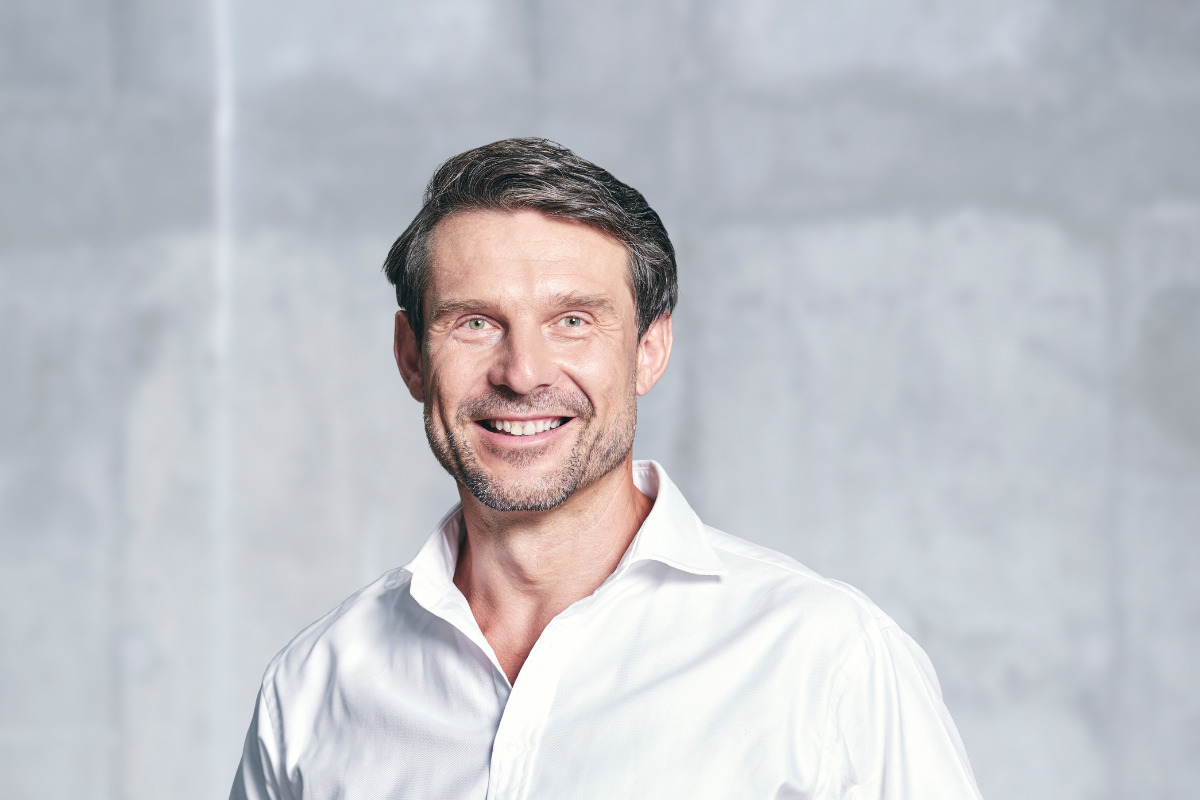
We focus on fundamentals, says Oldřich Šoba of Jet Investment


Rising geopolitical tensions are adding to market uncertainty, but they may also create opportunities for private equity, says Oldřich Šoba of Jet Investment in an interview with e15. The firm is betting on industrial growth in Central Europe and is planning investments of more than €300 million.
The conflict in the Middle East has heightened tensions in the markets. How do you assess the situation from an investment perspective?
It is a complex situation, even though our companies have virtually no direct exposure to the region. Some development activities may be delayed, and if the situation persists or escalates, it could affect global economic performance through energy prices and inflation.
Markets and stocks remain under pressure.
Yes, publicly traded stocks have declined, but our private equity funds invest in majority stakes in privately held companies in Central Europe. Their value is based on underlying fundamentals, and with an investment horizon of seven to ten years, they are not exposed to short-term market volatility. For us, this also creates opportunities.
Opportunities in what sense?
Funds can continue to expand, acquire additional companies and capacity, support growth, and strengthen fundamentals. Historically, our funds have delivered annual returns of more than 20 percent of IRR. Our approach emphasizes active ownership focused on strategic growth rather than day-to-day operational management or short-term fluctuations.
Where do you see the greatest potential today?
We generally do not react to short-term trends; we focus on long-term fundamentals. A clear example is the modernization of the energy sector and the push for greater energy efficiency in industry. Companies will need to invest in more efficient technologies, as energy prices are unlikely to decline over the long term. Central Europe is also facing rising labor costs, which is driving investment in automation. We are also increasingly focused on modern materials, high-quality food production, healthcare, and services for an aging population, as people invest more in health and overall quality of life.
What is decisive for you when selecting an investment?
We look at the market, product competitiveness, and management. We seek partners with deep industry expertise, while we provide strategic direction and support for growth, including add-on acquisitions. We typically acquire a 70 to 80 percent stake and work alongside the original owners. The investment director we appoint shares responsibility for strategic development. Our goal is to increase revenue and EBITDA and significantly enhance the company’s value over time.
Is a 70 to 80 percent stake your typical entry stake?
Yes, unless we acquire 100 percent. In the current Jet 3 fund, we enter nearly all investments with a majority, but not full ownership. The original owners remain involved and contribute to their industry know-how. If they are actively involved in day-to-day management, we typically agree that within two to three years they will be replaced by professional management. This helps prepare the company for exit and brings in a new perspective. Investors expect this and are willing to pay a premium for it, particularly when combined with further growth potential.
How many companies have you invested in over the roughly 30 years you’ve been in the market?
Since 1997, we have invested in around 40 companies in Central Europe, representing tens of billions of Czech crowns. Since 2015, we have operated as a licensed investment company. The Jet 1 fund raised €135 million, Jet 2 €165 million, and Jet 3 €185 million. We expect Jet 4 to exceed €300 million. All funds have an investment horizon of seven to ten years. In 2020, we also launched a real estate fund focused primarily on industrial properties, and in 2024 we added a venture fund focused on industrial projects.
Were all exits successful?
The vast majority were. Unsuccessful projects were rare. Profitable investments generated billions of crowns, while losses were typically in the millions. This is reflected in our long-term IRR. Projects that failed were often either too small in scale or highly customized. That is why we focus on larger companies with strong growth potential, competitive products, and high-quality management.
How do you select experts?
We rely on a combination of professional networks and long-standing relationships. When needed, we also approach candidates proactively, as we did recently during the CEO transition at Tedom.
And that acquisition turned out well?
Yes, although it required several steps. We completed the integration of the German subsidiary Tedom Schnell, navigated the COVID-19 period, and during the energy crisis and the war in Ukraine expanded our business model by establishing Tedom Energie. According to market data, it is now among the fastest-growing suppliers in the Czech Republic in terms of connection points. We also identified new opportunities in Italy and the United Kingdom, expanding the group with Intergen and Tedom UK, and established a joint venture in Poland. As a result, turnover has increased from CZK 4 billion to CZK 8–9 billion over four years.
Historically, you have focused on the Czech Republic. Has that changed?
Yes. While most investments were historically in the Czech Republic—primarily in export-oriented companies—the share of foreign projects or those with a significant international component has been increasing since Jet 2. We are focusing, for example, on Poland, the United Kingdom, and Germany. We are also active in other Central European markets, such as Romania and Hungary, while always considering local conditions and potential.
The Jet 4 fund has recently launched. What is its current status?
We are completing the investment phase of Jet 3 and expect to deploy the remaining capital by midyear. At the same time, we are preparing Jet 4, with capital expected to exceed €300 million. Around 30 percent has already been committed, and additional commitments are close to being finalized. We expect to complete fundraising during 2026 and to transition seamlessly from Jet 3 to Jet 4. The investment period will be three years, with a total horizon of ten years.
What you are most often interested in
Files for download