“We are not attracted to the arms industry; we still believe in energy and engineering,” says Fait’s investment strategist Malík after another billion-dollar acquisition


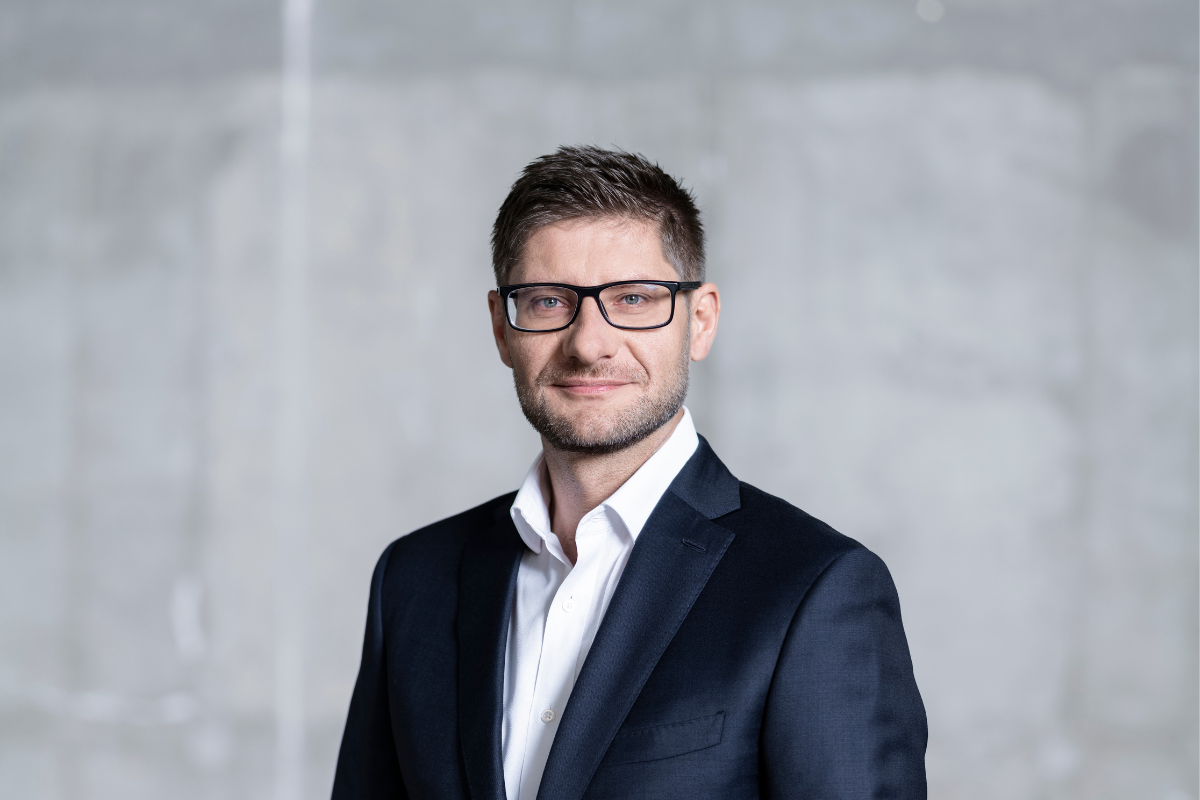
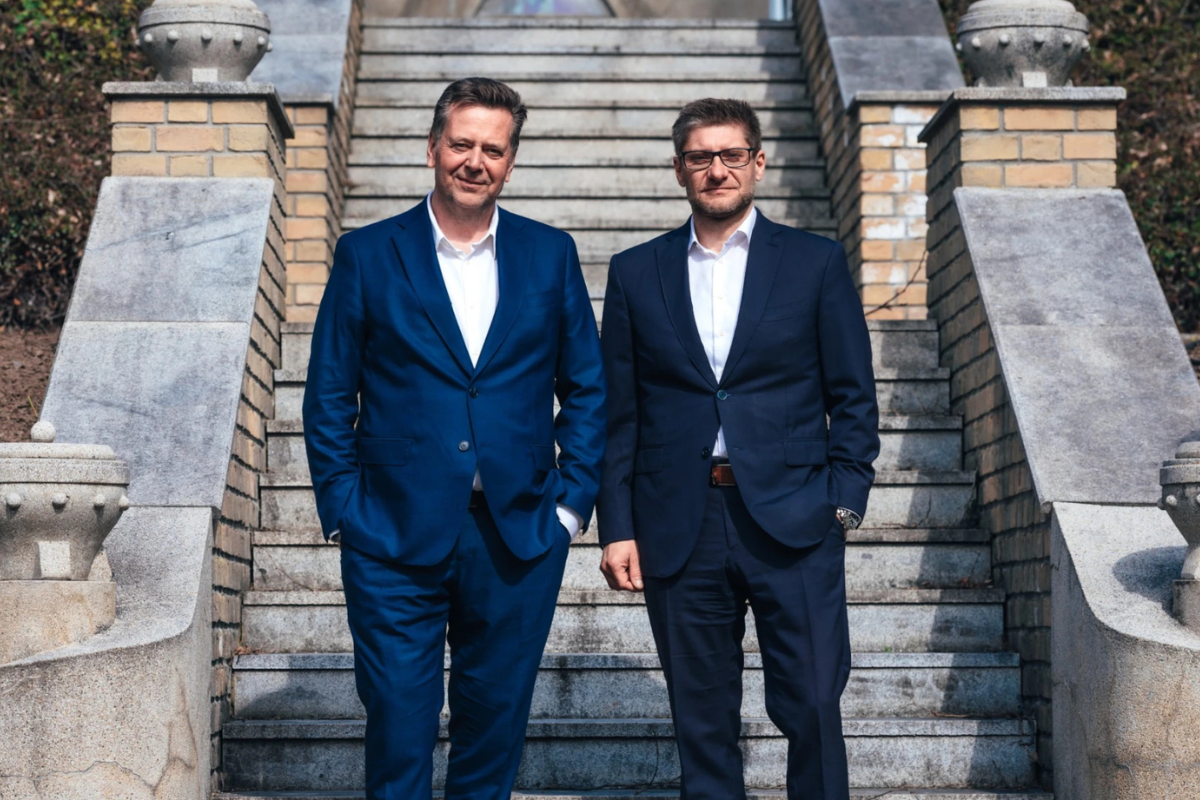
Jet Investment managing partner Marek Malík is the leading investment strategist for billionaire Igor Fait.
He regularly commutes between the firm’s office in Prague’s Quadrio complex and Brno, where the company was founded and remains headquartered. Fifty-year-old Marek Malík has long served as billionaire Igor Fait’s right-hand man and chief investment strategist.
As managing partner of Jet Investment, Malík has had a busy period. The group recently completed the sale of Rockfin, a Polish manufacturer and supplier of compressor solutions, to a consortium led by the German investment company Capmont and Poland’s Rio Asi.
The transaction was expected to bring the Brno-based fund more than CZK 7 billion, although the parties did not officially disclose the price.
Now Jet has announced a new acquisition. Through its portfolio company 2JCP, based in Račice, the firm is acquiring ACS, an electrical engineering company headquartered in Příbram. The move will expand 2JCP’s capabilities in technologies for decentralized energy systems based on renewable sources such as hydrogen and wind.
You have just sold Rockfin. How significant was the deal?
Quite significant. We have not publicly disclosed the sale price, but we can say that it was very similar to that of the cogeneration-unit manufacturer Tedom. (Market speculation at the time put that transaction at CZK 6.5 to 7 billion.)
Both companies were comparable in terms of size and the scale of our investment. Rockfin was slightly more expensive for us to acquire because it was at a somewhat different stage of development.
In what way?
We bought Rockfin for the Jet 2 fund, which we launched in January 2019. The first investment was Tedom, the second was 2JCP.
We always try to focus on sectors with strong growth potential, because managing companies in expanding markets is easier and results tend to come more naturally than in declining industries. When we analyzed the market at the time, one of the segments we identified as particularly promising was energy engineering.
That was before COVID and the energy crisis.
Even around 2019–2020 it was already clear that global energy production capacity was insufficient. It may sound paradoxical, but it was partly the result of decarbonization pressure: traditional sources were being phased out, which naturally created a supply gap.
At the same time, forecasts suggest that global electricity consumption could increase by roughly 2.5 times by 2050. That represents an enormous opportunity—and a market we should be interested in.
But you significantly changed Rockfin’s focus, didn’t you?
When we acquired the company, it was heavily dependent on orders from the oil and gas sector, supplying highly sophisticated compressor solutions.
Gradually, however, Rockfin expanded into other parts of the energy sector as well as broader industrial applications. The main risk in our investment was that oil and gas is an extremely cyclical industry. When commodity prices fall, investment slows—and when prices rise, it accelerates again.
At the same time, with decarbonization underway and mobility shifting toward electrification, along with broader changes in heating systems, it is reasonable to expect that oil and gas will gradually decline over the long term.
So you had to redirect the company?
Not entirely. Rockfin already had strong capabilities: it could deliver complex engineering solutions with a high level of technical expertise and value added.
Our goal was to diversify—from compressor solutions for oil and gas toward modern energy, both centralized and decentralized. Over time, new divisions emerged as additional opportunities appeared in the market.
Operating from Poland also created a structural advantage, thanks to competitive engineering and labor costs. That advantage proved valuable globally throughout our ownership period.
You were finalizing the sale when Donald Trump shocked markets with his tariff policy. Did that threaten the deal?
We had to address it. Of course we evaluated the potential impact of tariffs on Rockfin, but management did not see any major risks for the company itself.
Our bigger concern was the transaction process. In periods of uncertainty, investors often pull back. For about a month we debated whether to pause the process. Ultimately we decided to proceed because we saw strong long-term interest in the company.
How did you grow the company during your ownership?
It’s important to note that we paid virtually no dividends during the entire period. Instead, we reinvested profits back into the business.
We acquired the company in December 2021. At that time it had about 700 employees, including roughly 320 engineers. Today it employs around 1,400 people, including about 640 engineers.
In other words, we significantly increased the company’s “brainpower.” That investment is expensive but creates enormous opportunities. Administrative staffing remained largely unchanged—we focused primarily on building expertise that creates real value.
But you also built new production facilities.
Yes. We expanded capacity across the board. In Gorlice we tripled capacity, we opened new facilities in Elbląg, and we took over GE’s entire engineering team in Gdańsk along with its infrastructure.
We also acquired Petroff, a service organization that allowed us to build Rockfin’s service division and move closer to customers. Previously, service had often been provided through partners.
We expanded the product portfolio as well. In addition to energy, we entered the defense-solutions segment—for example with hydraulic systems for mobile radar units. Rockfin is now a direct supplier to the Polish army. We also developed systems designed to support power-grid stability.
And economically?
In 2021 the company generated approximately €85 million in revenue and €8.5 million in EBITDA.
Today it generates roughly €230 million in revenue and €33 million in EBITDA. The order book is at a historic high, and the pipeline of potential projects is the strongest the company has ever seen.
For 2026 we expect EBITDA to approach €40 million and revenues about €270 million.
The company has grown significantly, largely thanks to its management team and its strong performance orientation. Polish managers are very ambitious and globally minded. Rockfin now serves customers on every continent.
Notably, in 2025 about 40 percent of sales came from products introduced during our ownership—a remarkable result.
Two years ago Tedom, now Rockfin. Is that your typical investment pattern?
The pattern is similar across many of our acquisitions, although each project is unique. Every investment has specific characteristics that must be taken into account.
The most important thing we bring to companies is what we call value creation. That is the core of our approach. At the same time, it is very difficult to describe verbally because it involves many nuances that managers have to experience in practice.
That is why we focus on building a stable and motivated team that continues to learn and develop. In fact, only one person has left the firm over the years—and even he eventually returned.
Marek Malík (50)
Marek Malík joined Jet Investment in 2010 and became a partner in 2013, where he has been closely involved in the strategic development of the firm. He serves on the investment committees of Jet funds and, as a member of the boards of several portfolio companies, helps shape their long-term strategy.
Earlier in his career, he was responsible for sourcing acquisitions and successfully managing portfolio companies and their exits.
Before joining Jet Investment, Malík worked in financial markets at Bank Austria Creditanstalt and later at Deutsche Bank in Prague and London, where he traded on financial markets across Central and Eastern Europe.
He graduated from Brno University of Technology and Nottingham Trent University.
What were the biggest differences between Tedom and Rockfin?
The main differences appeared in the initial and post-acquisition phases.
We acquired Tedom directly from its founders, which meant we had to introduce a number of managerial and procedural systems that are necessary when you run a company in a professionalized way.
In the case of Rockfin, this was less necessary. The financial investor from whom we acquired the company had already started transforming internal processes. The transformation was not fully completed, but the foundations were already in place.
How did the companies’ development differ under your leadership?
In terms of value creation, the approach was quite similar—mainly through business development and expansion.
At Tedom, we expanded both regionally and globally through our sales and service network. We opened operations in the United States, the United Kingdom and Kazakhstan, acquired the Italian company Intergen, and significantly expanded our business in Poland. Service is a major part of Tedom’s business model.
And what about Rockfin?
With Rockfin, we expanded significantly through commercial and engineering branches.
Today, around 30 percent of the company’s business comes from operations in the United States and Italy. We also established a joint venture with Al Zamil Heavy Industries in Saudi Arabia.
Rockfin now operates five production plants and two support facilities in Poland, one plant in Saudi Arabia, and a standby production unit in Switzerland.
Engineering represents a major share of the value delivered to customers. Much of the company’s expansion therefore came through product development aimed at modern and cleaner energy solutions.
So the process is complete and the money is already in your account?
Yes, the transaction has been fully settled.
There was also a major difference between the sale of Tedom and Rockfin. The Tedom sale was a bilateral process, where we negotiated with a single buyer.
Rockfin, by contrast, involved a large international tender.
At the beginning we ran a tender to select advisors, which took some time. Several major investment banks participated, including firms from London. We expected that some investors might come from Poland, so we did not want to overlook that market. We also tested the possibility of working with an Asian advisor because we anticipated interest from Asia.
In the end, however, we concluded that the most likely buyers would come from the United States, Western Europe, and the region, and we selected PwC as our advisor.
When you sell a company to financial investors, the documentation must be extremely precise and well prepared. The entire process lasted almost a year, and preparation began even earlier. It met the highest standards currently used in the market.
What is the current status of the Jet 2 fund? Is the payout approaching?
Not yet.
The second fund still includes other investments, specifically the engineering company 2JCP and the printing group EDS.
Within Jet 2 we acquired four core platform companies and subsequently made six additional investments, with a seventh currently underway.
We have already divested roughly half of the fund, and both Rockfin and Tedom contributed significantly to its overall performance.
So what kind of return has the fund achieved?
The return from Rockfin for the fund is approximately 44.5 percent annually and about 4.1 times the initial investment.
The key drivers of this performance were revenue growth, improved margins, and the successful sale of the company. There were no extraordinary effects—we simply reinvested profits back into the business.
In that sense, it is a textbook example of value creation in private equity.
So investors already have a strong return thanks to Tedom and Rockfin alone?
Those two companies represent roughly half of the fund’s investments.
The unrealized return is approximately 26 percent per year, or about 2.9 times the original investment.
If we look only at realized returns, investors have already secured about 20 percent annually and a 2.2x multiple of invested capital. The final outcome will depend on the performance of the remaining investments.
What about 2JCP? Could it follow a similar path as Tedom and Rockfin?
2JCP is currently on an extraordinary growth trajectory. At this point we are not planning additional exits because we see significant opportunities for further development.
Compared with last year, 2JCP increased EBITDA by about 35 percent, reaching approximately CZK 330 million.
For this year, we expect EBITDA to increase further to around CZK 450 million, again roughly 35 percent growth.
The company’s order backlog is at a historic high.
Is 2JCP changing its focus? What products are driving growth?
The core products are filtration and acoustic systems for gas and combined-cycle power plants.
At the same time, the company is an important partner to key players in the hydrogen sector, including cooperation with Siemens on the supply of large electrolysers.
We have also developed solutions in circular energy systems—for example CO₂ capture, its conversion into e-fuels such as e-methanol, and subsequent use in a zero-emissions energy system.
So if selling the company is not the right move, you look for acquisitions that could complement 2JCP?
Exactly.
This week we signed another acquisition, purchasing ACS, an electrical engineering company based in Příbram with more than 25 years of experience in electrical installations, automation and control systems for the energy sector.
In 2025, ACS generated revenues of nearly CZK 500 million and EBITDA exceeding CZK 120 million.
The company employs 120 people, operates in four European countries, and delivers projects across Europe.
This acquisition will allow 2JCP to offer a broader range of solutions, both to its existing customers and to those of the acquired company, while also contributing its own technological know-how.
The transaction strengthens our ability to deliver comprehensive solutions—from design through manufacturing to installation. The integration plan is already prepared.
In the relatively near future we expect 2JCP to reach EBITDA of CZK 650–700 million, partly thanks to the contribution from this acquisition.
You are currently launching the Jet 4 fund. How large do you expect it to be, and will it differ from the previous funds?
We expect the fund to reach somewhere between CZK 8 and 10 billion, or roughly €350 million. That makes it significantly larger than Jet 3, which was about €190 million.
We raised Jet 3 at a time of extremely high interest rates, when the market environment was far more difficult and the war in Ukraine had just begun. Even under those circumstances, it was still a sizable fund.
Today we already have signed commitments from larger institutional investors—something we did not have in earlier funds. And because investors have already received roughly 2.2 times their invested capital, we expect them to continue investing with us. They see the opportunity for further returns.
You recently said that you like Colt shares. Does that mean you are attracted to the arms industry?
Personally, I am not particularly drawn to the arms industry in the sense that you are producing something designed to be destroyed, which does not create long-term economic value for society.
That said, defense and security are obviously important and deserve investment.
My comment was more about valuation. I do not focus so much on P/E ratios (price-to-earnings). Instead, I look more at EV/EBITDA (enterprise value relative to operating profit before interest, taxes and depreciation).
From that perspective, Colt trades at roughly twelve to thirteen times EBITDA, while companies such as CSG and other defense manufacturers often trade at seventeen to twenty times, and Rheinmetall at around forty times, which seems excessive to me.
Viewed through that lens, Colt shares still appear relatively attractive.
How active are you personally in the markets today?
In January I significantly reduced my equity portfolio in public markets—I sold more than half of it.
My feeling is that valuations have become inflated, geopolitical risks are not fully reflected in prices, and the recent market boom has largely been driven by AI, which could eventually lose momentum.
We are already seeing declines even among companies that are traditionally considered benchmarks of stability.
So at the moment I am taking a defensive stance. Colt still makes sense to me from a valuation standpoint, but I expect the market may experience a correction, which is why I am being cautious.
(The interview took place before Saturday’s attack on Iran. Subsequent market reactions appear to support Malík’s view — editor’s note.)
From the perspective of Jet Investment, do you plan to acquire defense companies for Fund 4, given how strongly the sector is performing?
Definitely not.
The defense industry operates under very different dynamics. It is heavily influenced by lobbying and relationships with governments—areas where we have neither experience nor ambition.
We simply do not operate in that space, and I do not see what additional value we could bring there. So Jet will not be entering the defense sector.
In the past you have been involved in complex restructurings, so you are not afraid of stressful situations. There are currently many insolvencies in the Czech Republic—are you looking at those types of assets?
In general, we look at all potential investments in industrial sectors that are close to our expertise.
If a company has an interesting product but has run into trouble—for example due to poor management, heavy capital expenditure, or temporary market fluctuations—that can certainly attract our interest.
Whether the company is part of a larger group or operates independently is not particularly important.
So, for example, would you consider companies connected to RSBC?
Situations involving bond-financed ownership structures can be more complicated.
If bonds are used to finance the ownership level, the situation is no longer only about creditors at the operating company level. You also have another category of creditors representing the parent ownership structure.
Because those creditors effectively represent ownership interests, restructuring or insolvency proceedings can become significantly more complex.
Last year there were rumors that you were close to joining the energy group Solek. Was there any truth to that?
It is true that in 2024 we considered possible cooperation with Solek in the development of photovoltaic projects.
However, after analyzing the technical and economic parameters—and especially the expected returns—we decided not to proceed.
It is a type of business better suited to infrastructure funds, rather than to our strategy.
It was simply one of several opportunities we evaluated, but it did not meet our investment criteria.
Jet Investment and its owner Igor Fait are also increasingly associated with football and the Brno club Artis. Are you personally involved in that?
Football is something of a company sport for us—alongside golf.
When the weather is good, we play football perhaps twice a week, so it is something many of us at Jet enjoy.
Igor is, of course, a huge football fan, and I know he had been interested in it for a long time. But Artis is purely his private project—I would describe it as a major personal hobby.
Organizationally and financially it has nothing to do with Jet. It is entirely linked to Igor Fait as an individual.
From a personnel perspective it is completely separate as well—Igor has his own team working independently of Jet.
And you personally were not tempted to get involved?
Igor did ask the other partners whether we wanted to participate.
I told him I would need to think about it because it is something completely different from what we normally do. In the end the idea faded away and Igor decided to pursue it on his own.
The rest of us are not involved.
Of course we support it because we enjoy it, and for me personally it is great to follow it closely and see what happens behind the scenes—without having to finance it.
Do you attend the matches?
Of course.
It is great to be there. The atmosphere and emotions are incredible. The promotion play-offs are approaching.
It would be fantastic to earn promotion, but I do not want to speculate. The promotion system is quite demanding and unpredictable. We will see how it turns out.
What you are most often interested in
Files for download