Being near a highway in Poland isn’t enough


Originally, they wanted to focus solely on existing income-generating properties, but last year, the Jet Industrial Lease fund decided to expand its activities to include the construction of new industrial and logistics facilities. “Unlike most of our competitors, we handle development in the real estate fund using investors’ money, so the margin generated from these projects remains in the fund. This way we can maintain its long-term yield above 10 percent annually,” explains Jan Kos, Director of Acquisitions and Divestments for Real Estate Projects at the Jet Industrial Lease fund.
Last October, you purchased two projects in Gdańsk and Rzeszów, Poland. In both cases, you will be building new warehouses on the land acquired. Does this represent a shift away from the fund’s original strategy of primarily purchasing existing properties through sale & leaseback transactions?
From the start, our fund has focused on income-generating properties with long-term lease agreements, including arrangements where we typically purchase a property from a manufacturing company and then lease it back to them. Last year, however, we decided to expand our activities to include development in order to further increase the fund’s profitability. Development projects are more attractive to investors in terms of returns, because the bulk of the appreciation comes after completion and handover to the tenants. However, we do not approach development projects speculatively; we always select those that have building permits and where most of the future space already has tenants lined up.
When you buy a project with a building permit and tenants, can you still achieve an above-average return?
Certainly, a plot of land with a building permit has a higher value than one without it. However, the main return comes during the actual construction phase. I dare say that with such projects, we are able to achieve a return on our own invested capital, measured by the internal rate of return (IRR), at a level of 20–30 percent.
What is your equity-to-debt ratio?
We always use financial leverage to increase the return on our equity. Specifically, in the projects in Gdańsk and Rzeszów external financing accounts for 65 percent and equity for 35 percent.
Why did you choose Gdańsk and Rzeszów in particular?
They are among the most interesting locations in Poland. In Rzeszów, we are in close proximity to the international airport and the highway. Moreover, it will be one of the key logistics hubs for the reconstruction of Ukraine once the war there ends. Gdańsk is perhaps one of the most promising locations in Poland. A highway connecting northern Germany with Warsaw is nearing completion. Furthermore, the expansion of Gdańsk’s cargo port—which was previously the fifth-largest in Europe in terms of cargo volume—will soon be finished. After the expansion, it will become the third-largest in Europe. It can also benefit from the fact that the northern route around Russia will be increasingly used for transporting goods from China to Europe. Thanks to this, carriers could shorten the journey from 30 to about 20 days, compared to the southern route.
Do you plan to focus on logistics at both locations, or will you also have manufacturing companies among your tenants?
In Rzeszów, the focus will primarily be on logistics. In Gdańsk, logistics will predominate, but we will also have light manufacturing there. Both projects will also include ‘last-mile’ logistics, or the delivery of shipments to their final recipients. In one case, the tenant will be Dachser; in the other, DPD. That’s why there will be significant investment in automation there as well.
Do you see other opportunities for acquisitions in Poland?
Poland will also dominate our future acquisitions. At this point, we are in an advanced stage of negotiations to purchase an existing logistics facility, and we are also looking at two to three other development projects. The logistics complex and one of the development projects are located near Warsaw. One development project is located near Gdańsk and one in central Poland.
If you were to compare the industrial and logistics real estate segments in Poland and the Czech Republic, what is the biggest difference?
In size and opportunities. But also in the speed of permitting processes. We’ve already proven several times that we can secure permits for a large project in Poland within a matter of months, or at the latest within a year. Something like that is a pipe dream in the Czech Republic.
Transport infrastructure is developing relatively quickly in Poland. How does this influence the development of new locations that are becoming attractive for industrial real estate investment?
We have to be very careful when selecting a location in Poland. We recently evaluated a project that seemed economically sound and was already occupied by tenants, but we didn’t like the location. That’s why we ultimately decided against it. For example, simply being near a highway isn’t a guarantee that it’s a good location. In the Czech Republic, on the other hand, the fact that you’re near a highway and a major city is half the battle.
Where does the problem usually lie?
We have to look at the potential of the entire metropolitan area—how developed the local industry is, what sectors are present, the population density, and the availability of labor. Even the fact that a project is near Warsaw isn’t necessarily a guarantee of success. There are places near the capital that perform better and places that perform worse—connectivity to major transportation routes, accessibility to the city center, and links to nearby manufacturing facilities all play a role.
Are there any opportunities for sale & leaseback transactions opening up for you in Poland?
We currently have two such projects on the table, both involving manufacturing facilities. However, it remains true that this model is more developed in Western Europe, where entrepreneurs are more open to the idea of manufacturing in leased spaces. When we first started with sale & leaseback in the Czech Republic, companies looked at us with some confusion, wondering why they should sell the roof over their heads and move to a lease. We try to explain to them that it’s better for them to focus on their core business, rather than act as asset managers. They can make better use of the money they receive from selling real estate by investing it in expanding and modernizing production. Simply by separating the core business from real estate, you can achieve a valuation that is up to tens of percent higher for both parts through a sale & leaseback arrangement.
What percentage of your portfolio do you want to allocate to real estate acquired through sale & leaseback?
Properties with long-term lease agreements, including those acquired through sale & leaseback, should make up roughly half of new investments. Development will constitute the other half of the portfolio. We also have interesting sale & leaseback and development projects in the Czech Republic. We are currently working on the acquisition of a very interesting development project in Austria, which we would purchase with a building permit and a primary tenant already in place. We would build it with a local development partner. We are also looking at opportunities in Germany, which are opening up particularly in the manufacturing sector.
The Austrian and German markets are not doing very well, at least in residential and office development. Are industrial properties faring better?
The entire German economy is not in ideal shape. The crisis in the automotive industry has hit it very hard. But the crisis is bringing interesting opportunities. There are plenty of them, but we have to choose very carefully. We believe that among them there are also healthy companies with which we would not hesitate to collaborate in the form of a sale & leaseback arrangement.
Now that industry has run into trouble, is it difficult to assess the creditworthiness of a partner who is expected to operate and thrive for at least another ten or fifteen years, during which time you would have them as a tenant?
We vet all tenants much like a bank does, because we’re entering into a long-term relationship. We want the tenant to succeed, so that we can potentially expand further with them. We don’t just assess the property itself; we also conduct business due diligence on a manufacturing company. So, we also look at it from the perspective of the business. We evaluate the location where it operates, both in terms of infrastructure and the overall metropolitan area. Quite often, we draw on the expertise of colleagues from our private equity funds during these analyses.
Are there any sectors you wouldn’t enter, that you don’t believe will survive the current crisis?
The automotive industry is the most sensitive. It’s not that we avoid it entirely, but we approach it very selectively. We’re interested in exactly what a given company does for the auto industry. For example, we had a sale & leaseback acquisition on the table for a company that manufactures exhaust systems. Its future is currently a big question mark, because it’s still not entirely clear what role combustion engines will play in the market.
How far along are you with the development project in Odolena Voda?
Before last Christmas, we expanded it by 54,000 square meters, effectively doubling the total area. We’re continuing with the development and moving toward a project that will consist of small business units. Neither a large logistics center nor a large manufacturing plant would be suitable there.
Are you taking the approach of pre-leasing and then building there as well, or would you dare to undertake speculative construction so close to Prague?
We would like to start building only once we have pre-leased at least fifty percent of the space. That could be as early as next year. Moreover, we will very likely build in phases. The location is very interesting because vacant land around Prague is practically non-existent. It’s a major success that we managed to secure over 10 hectares of land near the capital and, moreover, next to a highway. Odolena Voda is an exception in our portfolio. It’s the only project where we pursued a land acquisition and are handling all the permits ourselves.
Do you have any other acquisitions in the Czech Republic on the table?
We have one project under contract in southern Bohemia, also with an area of 100,000 square meters. However, we will only purchase it once we have a building permit and after achieving a certain level of pre-leasing. We will be working on that this summer.
You set a goal to increase the fund’s value fivefold by 2030 compared to last year. Is that still the plan?
Personally, I set shorter-term goals. By the end of 2025, we managed assets worth CZK 4.5 billion. Next summer, we want to reach CZK 10 billion. But that essentially aligns with the trajectory you mentioned.
How much new capital will you need to raise for the fund to reach CZK 10 billion next year?
Last fall, when we completed our Polish acquisitions, we raised just over CZK 1 billion from investors. We successfully invested most of it. This year, we expect investments of a similar amount. We already know which projects we would put that money into. The projects and properties we’re looking at actually exceed this equity amount.
Is the number of projects coming to your desk for review increasing?
The number is definitely growing. Every year, we have hundreds of opportunities on our desk. We look at dozens of projects in detail. From those, we like to select and invest in four to five each year.
How easy is it these days to attract investors’ attention and raise additional capital for the fund?
It’s true that there are lots of real estate funds in the Czech Republic, and the competition is growing. We want to differentiate ourselves primarily through above-average returns. Our average annual return since our founding five years ago is now 10.5 percent, and we want to maintain double-digit returns in the coming years as well. The decline in interest rates has certainly helped us in raising new capital. Cash is flowing into instruments with higher returns, which real estate funds are, while still maintaining the character of a conservative investment. At the same time, I would also like to mention that we are shortening the investment horizon by one year for our fund, to a total of 3 years. I believe this will be viewed positively, especially by investors who do not want to have their capital tied up over the long term.
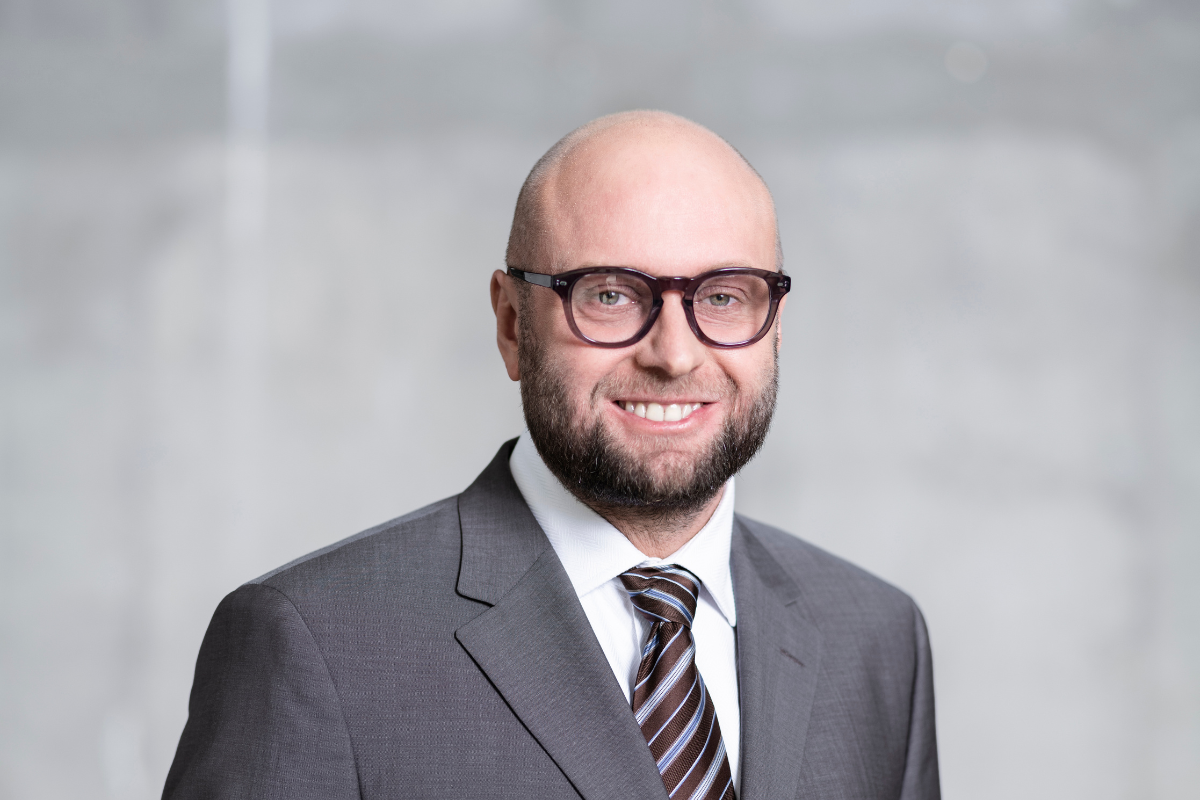
Jan Kos
He manages the acquisition of real estate projects in the Jet Industrial Lease real estate fund, including the entire process from identifying opportunities to executing transactions. He has spent his entire professional career in corporate finance. He previously worked at the consulting firm VGD Corporate Finance and several holding investment companies, where he was responsible for identifying investment opportunities, managing the entire acquisition process, and securing finance.
What you are most often interested in
Files for download